Speakers

Invited speakers

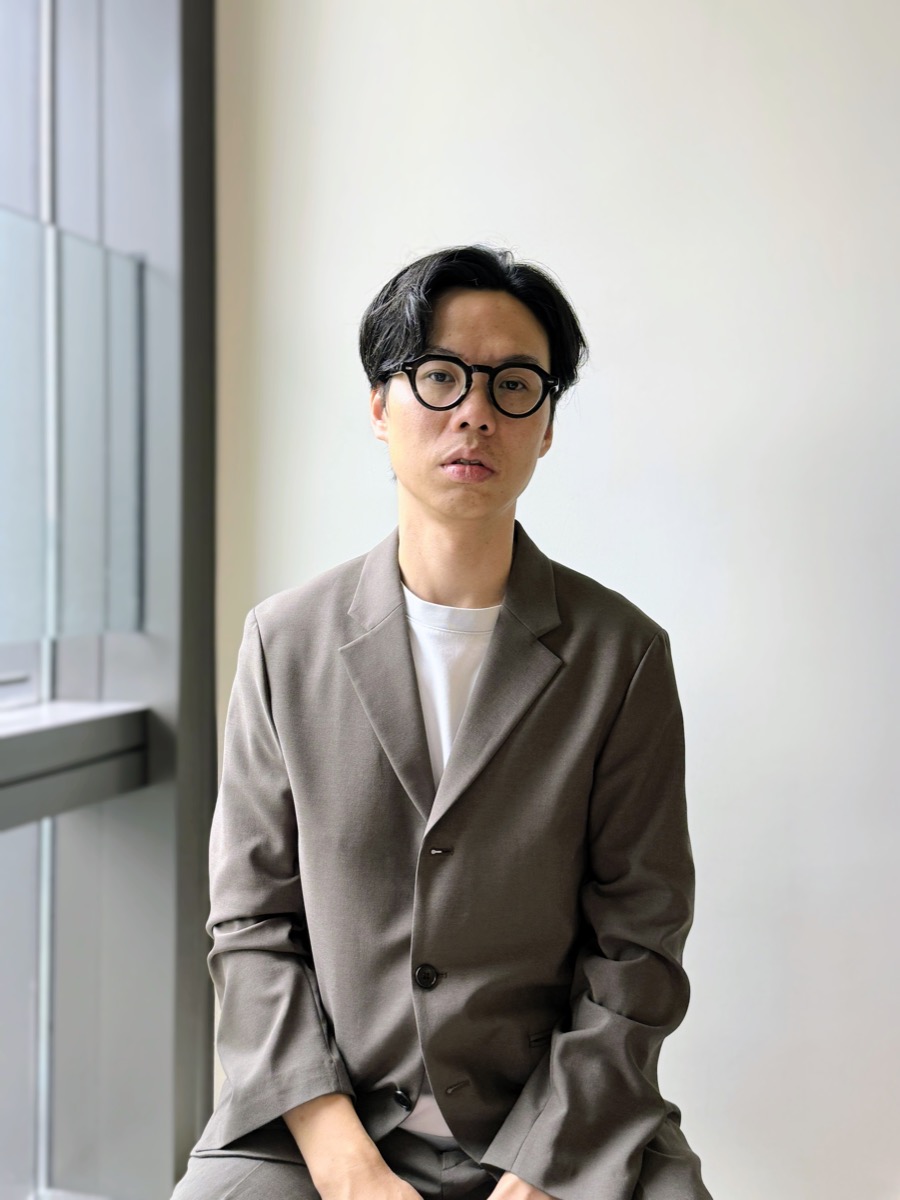
Portrait of Rostam J. Neuwirth

Rostam J. Neuwirth

University of Macau

Talk title

Pluralism and the Paradox of AI Alignment: Rethinking Human Intelligence in the Age of AI

Abstract

AI alignment seeks to ensure that intelligent systems act in accordance with human values and societal goals. Yet alignment raises a deeper question: what exactly is the human intelligence against which AI is measured? As AI systems become increasingly capable of learning, adapting, and making autonomous decisions, intelligence itself emerges as a contested and plural concept. This keynote explores the bi-directional nature of human-AI alignment: while AI must adapt to human values, humans must also develop the literacy and cognitive skills needed to work effectively with AI. This creates a paradox: how do we cultivate forms of intelligence that are only now emerging?

Bio

Rostam J. Neuwirth (諾思坦) is Distinguished Professor of Law and Head of the Department of Global Legal Studies at the University of Macau. Previously, he taught at the West Bengal University of Juridical Sciences (NUJS) in Kolkata and the Hidayatullah National Law University (HNLU) in Raipur (India) and worked as a legal adviser in the Department of European Law of the International Law Bureau of the Austrian Federal Ministry for Foreign Affairs. He received his PhD degree from the European University Institute (EUI) in Florence (Italy) and also holds a master’s degree in law (LLM) from the Faculty of Law of McGill University in Montreal (Canada). As an undergraduate he studied at the University of Graz (Austria) and the Université d’Auvergne (France). He is the author of The EU Artificial Intelligence Act: Regulating Subliminal AI Systems (Routledge 2023), which was also translated into Chinese, as well as Law in the Time of Oxymora: A Synaesthesia of Language, Logic and Law (Routledge 2018). He has also published extensively in international journals on contemporary global legal issues, exploring the intrinsic linkages between law, on the one hand, and language, cognition, art, culture, society, and technology, on the other.

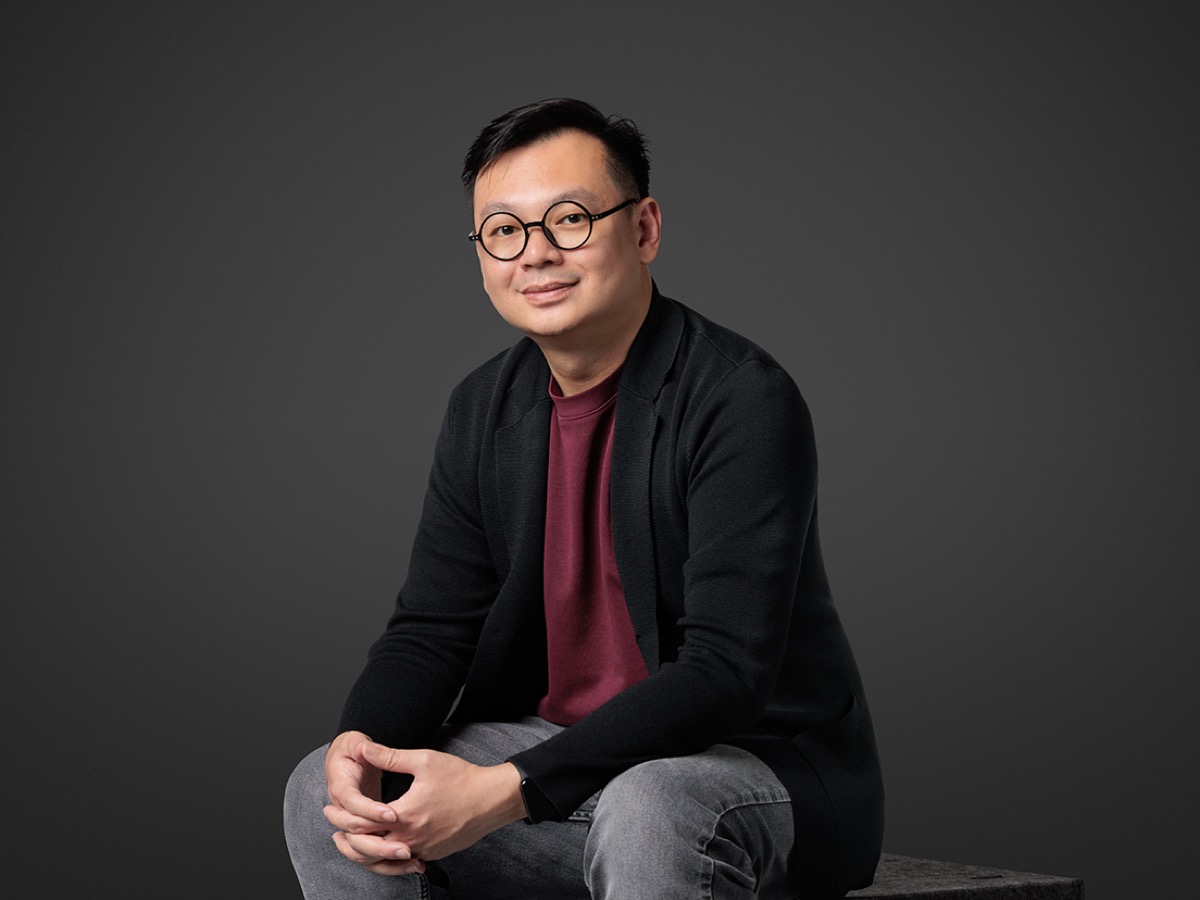
Portrait of Nancy F. Chen

Nancy F. Chen

Center for Frontier AI Research, A*STAR

Talk title

Grounding AI in Society

Abstract

I study communication across human–human, human–machine, and human–AI contexts, with particular attention to how expectations of communication shift across them. We expect humans to understand context, intent, emotion, and social norms; machines to be predictable, efficient, and reliable; and AI systems increasingly to satisfy both sets of expectations. This convergence creates new questions about trust, agency, accountability, and what constitutes meaningful communication and collaboration between humans and AI.

Against this backdrop, my work develops computational models of human communication and context, builds socially grounded technologies for trustworthy human–AI interaction, and investigates how language-model use reshapes learning, reasoning, and professional expertise. The unifying goal is to augment human capability and potential while preserving human agency and cognitive resilience. I illustrate this research agenda through case studies spanning healthcare, education, eldercare, collaborative learning, and digital services.

Bio

Nancy F. Chen is a Lead Principal Investigator and leads the Ethical and Trustworthy AI pillar at Center for Frontier AI Research, A*STAR. Her work focuses on building human-centered frontier AI that can reason, communicate, and act responsibly in diverse social, cultural, and linguistic contexts. She works across trustworthy and agentic AI, multimodal and multilingual foundation models, speech and conversational intelligence, and human–AI collaboration.

Her research has increasingly explored how AI systems understand not only language and perception, but also people, values, emotions, culture, and social context. She has led work on culturally grounded AI, multimodal reasoning, AI safety and evaluation, educational AI, and socially intelligent interactive systems, with applications spanning public-sector and real-world deployments in Singapore. Chen received her PhD at MIT and Harvard. She is an ISCA Fellow and AAIA Fellow and has held leadership roles at major AI conferences, including serving as Program Chair of NeurIPS 2025 and ICLR 2023.

Portrait of Roy Ka-Wei Lee

Roy Ka-Wei Lee

University of British Columbia, Department of Computer Science

Talk title

Whose Values, Whose Safety? Building LLM Safety for a Pluralistic World

Abstract

Large language models increasingly mediate how people communicate, access information, and encounter harmful content online. Yet many current approaches to alignment and safety still assume relatively uniform preferences, cultural norms, or definitions of harm. In practice, societies are pluralistic: people differ in their values, languages, social identities, and interpretations of what is harmful or acceptable.

Drawing on recent work on subgroup value alignment, distributional evaluation, culturally grounded interaction, low-resource language safety, and online harm detection, this keynote examines what pluralism means for LLM safety. I will discuss how models can better represent legitimate differences within and across cultures, how safety should be evaluated when there is no single agreed-upon norm, and how current systems may systematically underserve less represented communities. I will conclude by outlining a research agenda for building LLMs that are not only safer, but also more equitable and responsive to the diverse societies in which they are deployed.

Bio

Roy Ka-Wei Lee is Associate Professor in the Department of Computer Science at the University of British Columbia. His work sits at the intersection of responsible AI, social computing, NLP, online safety, hate speech, and low-resource LLM safety. His research highlights cyber social safety and NLP/social computing, and his recent speaking record includes keynotes on multimodal AI for low-resource/social-impact contexts and AI for safer online spaces. His group also has recent work on safety alignment in low-resource English languages, including a best-paper recognition at the AAAI 2026 LM4UC workshop.

Portrait of Pak-Hang Wong

Pak-Hang Wong

Academy of Chinese, History, Religion and Philosophy, Hong Kong Baptist University

Talk title

Pluralistic Alignment Always, Sometimes, or Never? Taking Value Pluralism Seriously

Abstract

In an influential account of pluralistic alignment, Sorensen and colleagues argue that there are diverse individual goals, intentions, values, and perspectives, and that this diversity entails the need for AI systems to be capable of representing a diverse set of human values and perspectives. This research agenda is motivated, at least in part, by value pluralism associated with Isaiah Berlin and others, which holds that some fundamental human values can conflict and be incommensurable. However, relatively little work in pluralistic alignment has explored what follows if value pluralism is taken seriously, in particular what “plurality” or “pluralistic” means for pluralistic alignment.

More specifically, taking value pluralism seriously requires researchers to distinguish diversity in observed preferences or perspectives from disagreements that are irreducible, reasonable, or normatively worthy of preservation. Indeed, as a recent Roadmap by Poole-Dayan and colleagues points out, the fact that queries are subjective, open-ended, or value-laden does not in itself warrant pluralistic consideration; pace Poole-Dayan, I contend that user studies on when they think pluralistic answers are warranted do not by themselves address a prior normative problem, namely whether the diversity (or disagreement) is reasonable rather than the result of error, ignorance, bias, or merely heterogeneous preference—or, more generally, whether it constitutes a normatively worthy disagreement that deserves pluralistic consideration. Relatedly, there is an additional question concerning when such reasonable disagreement should affect the behaviour of an AI system.

Drawing on Rawls’s idea of overlapping consensus as a response to the fact of reasonable pluralism, I argue that taking pluralism seriously does not require every decision—or decisions at every level—to be pluralistic. Accordingly, Rawls illustrates one possible way to draw boundaries around when pluralistic consideration is warranted. Moreover, building on work on the epistemology of disagreement, scientific pluralism, and moral disagreement, I identify conditions under which disagreement has a legitimate claim to persistence. These conditions, in turn, will allow us to decide which queries deserve a pluralistic treatment, and when. In short, I propose an account of warranted pluralistic alignment: pluralistic treatment should not be activated merely by diversity, but by disagreement that satisfies specific epistemic and normative conditions, as well as other relevant considerations of whether the disagreement should remain open in the particular context of use.

In short, my objective is to propose an account of pluralistic alignment that avoids over-pluralisation and under-pluralisation. Yet, insofar as whether disagreement remains legitimately open often depends on roles, jurisdictions, epistemic standards, authoritative rules, and prior institutional arrangements, I conclude by proposing an institutional approach to pluralistic alignment in which normative and epistemic structures play an important role in determining what should be settled, what should remain plural, and when pluralistic treatment is appropriate.

Bio

Pak-Hang Wong is Assistant Professor in the Academy of Chinese, History, Religion and Philosophy, Faculty of Arts and Social Sciences, at Hong Kong Baptist University, and a Research Fellow at the Centre for Applied Ethics. His research explores the social, ethical, and political dimensions of AI and emerging digital technologies, particularly from an intercultural perspective. He is Editor-in-Chief (Ethics, AI & Data) of Ethics and Society and Associate Editor (Epistemology and Technology) of Philosophy & Technology. He co-edited Harmonious Technology: A Confucian Ethics of Technology, which offers an alternative, non-Western perspective on the philosophy and ethics of technology.